|
Lent Information |
|
Lent is a season of forty days, not counting Sundays, which begins on Ash Wednesday and ends on Easter Saturday, or Holy Saturday. Lent comes from the Anglo-Saxon word “lencten”, which means “lengthening daylight hours” or "springtime." The forty days represents the time Jesus spent in the wilderness enduring the temptation of Satan and preparing for His ministry. Lent is a time of repentance, fasting, self-examination, reflection and preparation for the coming of Easter. In the early church, Lent was a time to prepare new converts for baptism. Today, Christians focus on their relationship with God, often choosing to give up something, or to volunteer and give of themselves for others. Sundays in Lent are not counted in the forty days because they are considered “Holy Days” when the reverent spirit of Lent becomes a spirit of contemplation in joyful anticipation of Easter and Christ’s resurrection. Ash Wednesday marks the beginning of Lent. Ash Wednesday emphasizes two themes: our sinfulness before God; and our human mortality. The Ash Wednesday service focuses on both themes, helping us to realize that both have been triumphed through the death and resurrection of Jesus Christ. During some Ash Wednesday services, the pastor will sign the cross with ashes on the foreheads of worshipers. The use of ashes, as a sign of mortality and repentance, has a long history in both Jewish and Christian worship. Historically, ashes signify purification and sorrow for sins. Palm Sunday (aka Passion Sunday in the USA) the Sunday before Easter celebrates Jesus’ triumphant entry into Jerusalem which is recorded in all four Gospels. It is the start of Holy Week. In many churches, palm branches (or similar native trees) are used to represent the palm branches that were waved as Jesus entered Jerusalem. Crosses, often made of palm branches, are worn. Note: In some Western and Eastern cultures, Passion Sunday remains as the Sunday before Palm Sunday and marks the start of Christ’s suffering as He journeys towards Jerusalem and the period from Passion Sunday to Easter Saturday is know as Passiontide. Maundy Thursday is an alternate name for Holy Thursday, the first of the three days of solemn remembrance of the events leading up to the resurrection of Jesus. The English word "Maundy" derives from the Latin “mandatum”, which means "commandment." As recorded in John's gospel, on His last night before His betrayal and arrest, Jesus washed the feet of His disciples and then gave them a new commandment to love one another as He had loved them (John 13:34). In several cultures Maundy Thursday is also a day for alms giving (the practice of giving food or money to the poor). Why is Easter on a different day each year? In 325 AD, the Council of Nicea set the date for the celebration of Easter as the first Sunday after the first full moon following the spring equinox. Therefore, the date changes each year and falls between March 22 and April 25.
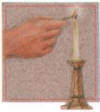
The Passover service itself is usually quite lengthy as the Passover story unfolds through the many prayers, songs, and narrative readings in the Haggadah. The Seder sometimes lasts until midnight or even the early hours of the morning before tired family members wander off to bed. As the family is seated, special seating arrangements are observed. The leader sits at the head of the festive dinner table. The youngest sits at his right side in order to fulfill a special role later in the Seder service. To the left of the leader, the guest of honor is seated, or sometimes the place setting is reserved for the prophet Elijah. The mother of the house ushers in the holiday by lighting the Passover candles. She then covers her eyes with her hands and recites a Hebrew blessing over the candles thanking God for the special occasion: "Blessed art Thou, O Lord our God, King of the Universe, Who has set us apart by His Word, and in whose Name we light the festival lights." The First Cup
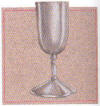
To begin the service, the father pours the first cup of wine and asks everyone to rise from the table. The father then lifts his cup toward heaven and recites the Kiddush ("prayer of sanctification") to set the day apart to God: Blessed art Thou, o Lord our God, King of the universe, Who createst the fruit of the vine. Blessed art Thou, O Lord our God, Who hast chosen us for Thy service from among the nations.... Blessed art Thou, O Lord our God, King of the universe, Who hast kept us in life, Who hast preserved us, and hast enabled us to reach this season. It was the Messiah, as the leader of the Seder service observed in the Upper Room, who said the Kiddush. "Then He took the cup, and gave thanks" (Lk. 22:17). The Washing of the Hands
The Green Vegetable
The Middle Matzah
The Four Questions
Why is this night different from all other nights? On all other nights, we eat either leavened or unleavened bread, but on this night, only unleavened bread? On all other nights, we eat all kinds of herbs, but on this night, only bitter herbs? On all other nights, we do not dip even once, but on this night, we dip twice? On all other nights, we eat either sitting or reclining, but on this night, we eat reclining? Often the youngest will recline upon the leader. This was the context of the apostle John reclining upon Jesus at their Passover supper. John recorded, "Now there was leaning on Jesus' bosom one of His disciples, whom Jesus loved" (John. 13:23). This would indicate that John sat to the right of the Savior and was the youngest at the meal, a position consistent with early Church tradition that John was the youngest apostle. John would have had the honor of asking the questions that night. The Second Cup
As the ten plagues are described, a tiny bit of wine is poured out for each plague. This expresses the sorrow felt for the suffering of the Egyptians. As the Passover story unfolds, the Seder tray and its symbolic elements are carefully explained and woven into the telling of the Passover story. Before the second cup of wine is taken, the first half of the praise psalms, known in Judaism as the Hallel (Ps. 113‑118), is recited responsively. Hallel is a Hebrew word meaning "praise." This word has made its way into many languages in the form of halleluiah, meaning "praise Jehovah." According to the Talmud, which records the ancient rabbinic commentary on Jewish practice, the Levites would chant this group of psalms while the Passover lambs for each family were being sacrificed. The Dipping of the Matzah
Then the upper matzah and the remainder of the middle matzah are broken into pieces and distributed to everyone. Each person must eat a piece of matzah dipped in the horseradish and haroset (apple mixture). This is a reminder of the sweetness of God's redemption in the midst of their bitter slavery. Each person then puts a filling of horseradish between two pieces of the matzah. This is called the "Hillel Sandwich." It is named in honor of the brilliant and revered first‑century rabbi who taught that enough of the bitter herb should be taken to bring tears to the eyes. In this way, each participant can personally identify with his forefathers who were slaves in Egypt. It was this ritual which gave rise to another important event in the Last Supper. The Messiah foretold that one of the disciples would betray Him (Jn. 13:21‑27). Peter motioned to John who was reclining against Jesus to inquire of whom this was spoken. Jesus replied that it would be the one to whom He gave a dipped sop (broken piece of matzah). Jesus dipped the matzah and gave it to Judas Iscariot. The Scripture is not specific as to the seating arrangement. It could be that Judas was sitting to the left of the Lord in the seat of honor and quite naturally would have received the matzah first according to tradition. It could also be that Jesus reached across the circle to begin with Judas first. However, if tradition was kept, everyone received a dipped piece of matzah that night. Perhaps this is why the disciples were still not clear as to who would be the betrayer. In either case, Judas left the service and went out to finalize the betrayal. This ceremony occurred before the meal, and Judas was not present later when Jesus instituted Communion after the dinner. The Dinner
The Afikomen
The Third Cup
It was here in the Passover Seder that the Messiah instituted the Lord's table. Luke reveals that it was "the cup after supper" (Lk. 22:20), the third cup or Cup of Redemption, that Jesus chose to be a reminder of His work on the cross. Passover is closely associated with the fervent hope for the coming of the Messiah. After the third cup, a child is sent to the front door to hopefully welcome in the prophet Elijah. It is hoped that the prophet will step through the doorway, drink his cup of wine, and announce the coming of the Messiah . This tradition is actually rooted in the Hebrew Scriptures, for Malachi prophesied, "I will send you Elijah the prophet Before the coming of the great and dreadful day of the LORD" (Mal. 4:5). Many believe that Elijah will be one of the two messianic witnesses mentioned in Revelation 11 since one of them will perform the miracles of Elijah. Although the Scripture teaches that Elijah will return in the future, it does not name the two witnesses, and one cannot be absolutely dogmatic about their identification. The Fourth Cup
Closing Hymn
The focal point of the Jewish Passover is a communal meal, called the Seder (which means "order," because of the fixed order of service), which is a time of rejoicing and celebration at the deliverance for the Hebrews that God accomplished in the exodus. Sometimes the meals during the entire period of Passover and Feast of Unleavened Bread are referred to as Seder meals. Note: What we at Asbury call our "Seder Type Lunch" is not a true Seder, but typical food, served during the life of Jesus. Each Wednesday, during Lent, we meet as a body of believers at Noon to 1:00pm. It is a time of fellowship, music, prayer, hearing about Jesus. We want to open our minds to the Holy Spirit, allowing Him to enrich each person with His overflowing love. Please share this time with a friend or friends. Your sharing partner may be anyone or everyone you know - friend, foe, relative, stranger, child, Senior Citizen. In other words, share with God's children. Lenten Luncheons at Asbury were started in 1971 by Fran and Dan McElheny and are entirely a product of volunteers - Speakers included. See History of the Lenten Luncheons at Asbury. How utterly tragic that the majority of the Jewish nation did not realize the truth of this Psalm, that the Messiah would first be rejected and suffer before He would reign on David's throne. How doubly tragic, since Psalm 118 was generally viewed as messianic and was even sung to Jesus proclaiming Him the Messiah at His so-called triumphal entry. Matthew recorded: "Then the multitudes who went before and those who followed cried out, saying: 'Hosanna [Hebrew for "Save now"] to the Son of David [a messianic title]! Blessed is He who comes in the name of the LORD!"' (Mt. 21:9).
|
|
Revised: March 22, 2026 |










 The
Lord used four expressions to describe His promised deliverance from
Egypt: "I will bring you out"; "I will rescue you from their bondage";
"I will redeem you"; and "I will take you as My people" (Ex. 6:6‑7).
Since wine is often a symbol of the joy of harvest, four cups of wine
are taken during the Passover service to reflect the fourfold joy of the
Lord's redemption.
The
Lord used four expressions to describe His promised deliverance from
Egypt: "I will bring you out"; "I will rescue you from their bondage";
"I will redeem you"; and "I will take you as My people" (Ex. 6:6‑7).
Since wine is often a symbol of the joy of harvest, four cups of wine
are taken during the Passover service to reflect the fourfold joy of the
Lord's redemption.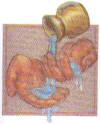 The
second ceremony of the Seder is known as the "washing of the hands."
One of the family members brings a pitcher of water, bowl, and towel to
each person at the table to wash his hands. The ceremony is a symbolic
act of purification as they prepare to handle the food. It was
probably this ceremony in the Seder that the Messiah used to teach His
disciples an object lesson. "[Jesus] rose from supper and laid aside
His garments, took a towel and girded Himself. After that, He poured
water into a basin and began to wash the disciples' feet, and to wipe
them with the towel with which He was girded" (John. 13:4‑5). His
object lesson demonstrated that He was about to become the suffering
Servant of the Lord, and as such, He would be the One to cleanse them.
The
second ceremony of the Seder is known as the "washing of the hands."
One of the family members brings a pitcher of water, bowl, and towel to
each person at the table to wash his hands. The ceremony is a symbolic
act of purification as they prepare to handle the food. It was
probably this ceremony in the Seder that the Messiah used to teach His
disciples an object lesson. "[Jesus] rose from supper and laid aside
His garments, took a towel and girded Himself. After that, He poured
water into a basin and began to wash the disciples' feet, and to wipe
them with the towel with which He was girded" (John. 13:4‑5). His
object lesson demonstrated that He was about to become the suffering
Servant of the Lord, and as such, He would be the One to cleanse them.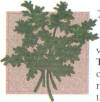 After
the hands are washed, the karpas (green vegetable) is dipped into
the salt water and eaten. The green vegetable is a reminder that
Passover occurs in the springtime. The salt water is a reminder of the
tears of pain and suffering shed by the Jewish people in slavery.
After
the hands are washed, the karpas (green vegetable) is dipped into
the salt water and eaten. The green vegetable is a reminder that
Passover occurs in the springtime. The salt water is a reminder of the
tears of pain and suffering shed by the Jewish people in slavery.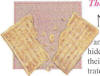 Next,
the leader removes the middle matzah from the linen bag to break it in
half. Half is replaced, half is carefully wrapped in a linen napkin and
hidden away in the house while the children cover eyes. It reappears
later in the service to illustrate a very important truth.
Next,
the leader removes the middle matzah from the linen bag to break it in
half. Half is replaced, half is carefully wrapped in a linen napkin and
hidden away in the house while the children cover eyes. It reappears
later in the service to illustrate a very important truth. At
this point, the youngest child is called on to recite his diligently
rehearsed part. The child asks the traditional Passover questions to
fulfill Exodus 12:26: "When your children say to you, 'What do you mean
by this service?"' Beaming with joy and accomplishment the child will
ask:
At
this point, the youngest child is called on to recite his diligently
rehearsed part. The child asks the traditional Passover questions to
fulfill Exodus 12:26: "When your children say to you, 'What do you mean
by this service?"' Beaming with joy and accomplishment the child will
ask: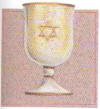 Next,
the second cup of wine is poured, and in response to the four questions,
a lengthy narrative recounting the Passover story begins. The story
relates the whole panorama of the beginnings of the nation: the calling
of Abraham in Ur; God's promises to the patriarchs; the story of Joseph
and his brothers; the enslavement of the Jewish nation; the deliverance
brought at the hand of Moses; and the giving of the Law at Sinai.
Next,
the second cup of wine is poured, and in response to the four questions,
a lengthy narrative recounting the Passover story begins. The story
relates the whole panorama of the beginnings of the nation: the calling
of Abraham in Ur; God's promises to the patriarchs; the story of Joseph
and his brothers; the enslavement of the Jewish nation; the deliverance
brought at the hand of Moses; and the giving of the Law at Sinai.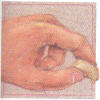 In
preparation for the meal, everyone present washes his hands a second
time for ceremonial cleansing.
In
preparation for the meal, everyone present washes his hands a second
time for ceremonial cleansing.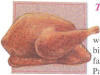 Next,
the dinner is served. In the day of Jesus, it would have consisted of
roasted lamb, served with bitter herbs and matzah. Today, however, the
meal is far more varied and sumptuous. A traditional Passover meal may
include delicious Jewish dishes of gefilte fish, matzah ball soup,
glazed chicken, matzah nut stuffing, potato kugel, honeyed carrots,
stewed fruit, and sponge cake. In every way it is a meal fit for a
king!
Next,
the dinner is served. In the day of Jesus, it would have consisted of
roasted lamb, served with bitter herbs and matzah. Today, however, the
meal is far more varied and sumptuous. A traditional Passover meal may
include delicious Jewish dishes of gefilte fish, matzah ball soup,
glazed chicken, matzah nut stuffing, potato kugel, honeyed carrots,
stewed fruit, and sponge cake. In every way it is a meal fit for a
king!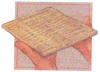 After
the meal, the children are sent out to find the broken half‑matzah that
was wrapped and hidden away. It is known as the afikomen. The children
search high and low with great excitement for they know that the one who
finds it will receive a reward. From a remote corner of the house,
shouts of delight announce that the desired treasure has been
discovered. Rabbinic law requires that a small piece of the afikomen be
broken off and eaten by everyone present at the service as a reminder of
the Passover lamb.
After
the meal, the children are sent out to find the broken half‑matzah that
was wrapped and hidden away. It is known as the afikomen. The children
search high and low with great excitement for they know that the one who
finds it will receive a reward. From a remote corner of the house,
shouts of delight announce that the desired treasure has been
discovered. Rabbinic law requires that a small piece of the afikomen be
broken off and eaten by everyone present at the service as a reminder of
the Passover lamb.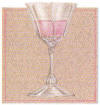 Next
in the ceremony, the third cup of wine, called the Cup of Redemption, is
poured and sipped.
Next
in the ceremony, the third cup of wine, called the Cup of Redemption, is
poured and sipped. 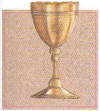 The
fourth cup of wine, called the Cup of Acceptance, or Praise, is poured
and taken. It was this cup that the Messiah said He would not drink
until He drank it with the disciples in the Kingdom (Mt. 26:29). He
knew that the hour of His acceptance by His Jewish nation was yet
future, and therefore His joy would not be full until then.
The
fourth cup of wine, called the Cup of Acceptance, or Praise, is poured
and taken. It was this cup that the Messiah said He would not drink
until He drank it with the disciples in the Kingdom (Mt. 26:29). He
knew that the hour of His acceptance by His Jewish nation was yet
future, and therefore His joy would not be full until then. At
the conclusion of the service, a hymn is usually sung or recited. This
was also the tradition in the day of Jesus. Matthew states, "And when
they had sung a hymn, they went out" (Mt. 26:30). Perhaps since Matthew
was writing to a Jewish audience, he knew that they would know the name
of the hymn since, by tradition, every Seder ends with the latter half
of the Hallel (Ps. 115‑118). How ironic that just hours before Jesus
was betrayed and went to the cross, He sang the prophetic words of Psalm
118: "The stone which the builders rejected Has become the chief
cornerstone. This was the Lord’s doing; It is marvelous in our eyes.
This is the day the Lord has made; We will rejoice and be glad in it.
Save now, I pray, O Lord; O Lord, I pray, send now prosperity. Blessed
is he who comes in the name of the Lord!" (Ps. 118:22‑26). The Messiah
sang these words just hours before He fulfilled them in becoming the
stone that was rejected by the religious leaders (cf. Mt. 21:42; Mk.
12:10; Acts 4:11).
At
the conclusion of the service, a hymn is usually sung or recited. This
was also the tradition in the day of Jesus. Matthew states, "And when
they had sung a hymn, they went out" (Mt. 26:30). Perhaps since Matthew
was writing to a Jewish audience, he knew that they would know the name
of the hymn since, by tradition, every Seder ends with the latter half
of the Hallel (Ps. 115‑118). How ironic that just hours before Jesus
was betrayed and went to the cross, He sang the prophetic words of Psalm
118: "The stone which the builders rejected Has become the chief
cornerstone. This was the Lord’s doing; It is marvelous in our eyes.
This is the day the Lord has made; We will rejoice and be glad in it.
Save now, I pray, O Lord; O Lord, I pray, send now prosperity. Blessed
is he who comes in the name of the Lord!" (Ps. 118:22‑26). The Messiah
sang these words just hours before He fulfilled them in becoming the
stone that was rejected by the religious leaders (cf. Mt. 21:42; Mk.
12:10; Acts 4:11). Re-printed
with permission from:
Re-printed
with permission from: